Ben MeadorsandGitHub
a8623a60c5
Ben MeadorsandGitHub
a8623a60c5
* Position: stream our own position to the phone/UI while mesh sharing is opt-in

Position broadcasts became opt-in in 2.8 (#10929): with every public channel
at position_precision 0, sendOurPosition() finds no eligible channel and
returns without queueing anything, so the connected phone or on-device UI
never sees the node's own GPS fix ("GPS looks dead" on standalone MUI
devices even though the receiver has a lock).

Mirror device telemetry's local delivery: once a minute, when the toPhone
queue is idle, stream our own position to the connected client at full
precision. The packet is handed straight to sendToPhone() and never touches
the mesh, so the per-channel opt-in and the public-channel precision clamp
still govern everything on the air.

Also stop logging "Send pos ... to mesh" before the channel scan has found
an eligible channel; when sharing is disabled everywhere the skip is now
logged explicitly instead of pretending a send happened.

The cadence gate is a pure static (shouldSendPositionToPhone) alongside the
existing broadcast-policy helpers, with unit tests covering the first-send,
cadence, gating, and millis() rollover cases.

* Review: only advance phone cadence on a queued packet; drop the ms==0 sentinel

sendOurPositionToPhone() now reports whether a packet actually reached the
phone queue, and runOnce() stamps the cadence only on success, so a guard or
allocation failure retries on the next tick instead of waiting out a minute.

The never-sent state is a dedicated hasSentPositionToPhone flag rather than
lastPhoneSendMs == 0, so a send stamped exactly at millis() == 0 still holds
the cadence. New regression test covers that case; existing cases updated to
the explicit flag.

* Review: align the rollover test fixture with its documented elapsed times

lastSent now sits exactly 30,000 ms before the uint32 wrap, so the two cases
are precisely 70,000 ms (sends) and 40,000 ms (held) - the previous comments
claimed 70s/20s against actual elapsed values of 70,001/40,001 ms.

Meshtastic Firmware




Overview
This repository contains the official device firmware for Meshtastic, an open-source LoRa mesh networking project designed for long-range, low-power communication without relying on internet or cellular infrastructure. The firmware supports various hardware platforms, including ESP32, nRF52, RP2040/RP2350, and Linux-based devices.
Meshtastic enables text messaging, location sharing, and telemetry over a decentralized mesh network, making it ideal for outdoor adventures, emergency preparedness, and remote operations.
Get Started
- 🔧 Building Instructions - Learn how to compile the firmware from source.
- ⚡ Flashing Instructions - Install or update the firmware on your device.
Join our community and help improve Meshtastic! 🚀
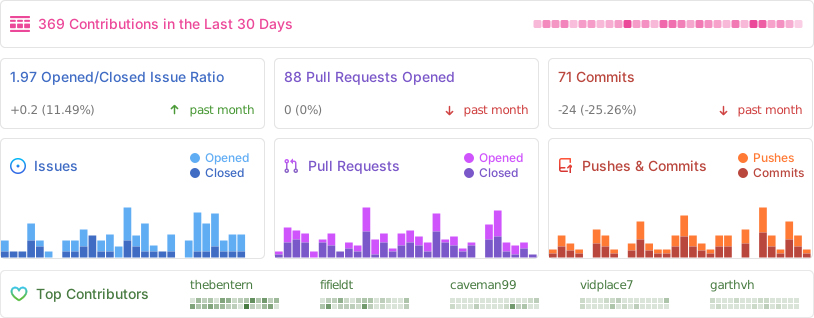
Stats