Ben Meadors
becfb770c1
Ben Meadors
becfb770c1
Since #10967 made Router::sendLocal handle self-addressed packets
synchronously, the entire phone-API chain for a BLE client runs inline in
the Bluefruit characteristic write callback: toRadioWriteCb ->
PhoneAPI::handleToRadio -> admin set-config -> radio reconfigure ->
NodeDB::saveToDisk. That callback executes on the Bluefruit BLE FreeRTOS
task, whose stock stack is 5 KB (CFG_BLE_TASK_STACKSIZE = 256*5 words) -
not the Arduino loop task that #10944 already raised to 8 KB. The loop-task
fix therefore protects the wrong task for BLE-originated writes.

On a Seeed Wio Tracker L1 the 5 KB stack overflows during pairing
first-sync, resetting the device mid-LittleFS-write, every single time.
Repeated mid-write resets tear the LittleFS metadata, lfs_assert fires on
the next boot, and the corruption handler formats the whole filesystem:
region, channels, module config, and the node's keypair are all lost
(critical fault #13, new node identity on next region set). Reproduced
end-to-end tonight on stock develop 6908d27; with this change the same
device pairs, serves config screens, and survives back-to-back
config.proto saves over BLE.

Raise the BLE task to the same 2048 words (8 KB) as LOOP_STACK_SZ, for the
same reason. bluefruit.cpp's #ifndef guard makes the -D take effect with no
framework patch. Costs 3 KB of RAM on nrf52840 targets only.

Credit where due: Ixitxachitl independently established in #11155 testing
that the save-path crash persists after #11185 and that re-queueing
sendLocal (moving the pipeline back to the Router thread) makes it go away
- which corroborates this diagnosis from the other direction. This commit
is the minimal capacity-side fix; #11155's relocation of the pipeline off
the BLE task remains the right architectural follow-up, and this guard
stays correct even after it lands.

Likely also explains #10905 (L1 display-thread crash when a client
requests full configuration) and the 2.8 field reports of idle nodes
losing region and keys after a BLE session.

Meshtastic Firmware




Overview
This repository contains the official device firmware for Meshtastic, an open-source LoRa mesh networking project designed for long-range, low-power communication without relying on internet or cellular infrastructure. The firmware supports various hardware platforms, including ESP32, nRF52, RP2040/RP2350, and Linux-based devices.
Meshtastic enables text messaging, location sharing, and telemetry over a decentralized mesh network, making it ideal for outdoor adventures, emergency preparedness, and remote operations.
Get Started
- 🔧 Building Instructions - Learn how to compile the firmware from source.
- ⚡ Flashing Instructions - Install or update the firmware on your device.
Join our community and help improve Meshtastic! 🚀
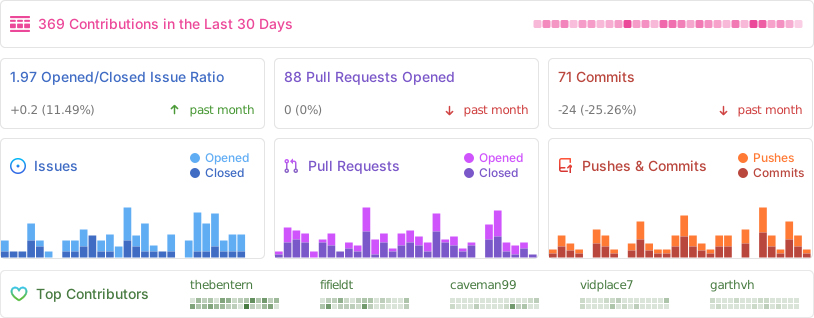
Stats